
Whether equipping field sales representatives, cleaning staff, machine operators, or installation technicians, mobile devices have become essential work tools.
Many companies have already undertaken the necessary work of aggregating data from their business applications to improve their understanding of operations. However, a significant portion of operational data remains inaccessible. Standard mobile devices make it difficult to collect and leverage this information. Yet combining operational data with business data creates considerable value: it allows organizations to visualize field activity concretely, across both space and time.
To centralize the management of these mobile devices, companies increasingly rely on Mobile Device Management (MDM) platforms (see the article “What is an MDM?”). These solutions make it possible to configure devices remotely, standardize usage, and provide support to users. However, they remain limited by the functionalities that operating systems and hardware manufacturers choose to make accessible.
Faced with these limitations, some organizations are exploring a different approach: vertical integration, where hardware and software are designed together. By controlling the entire technological chain, it becomes possible to unlock new capabilities for data integration and operational insights. This article explores the challenges and benefits of this approach.
Generic MDMs: a broad but not universal solution
There are many so-called “generic” MDM platforms designed to work across a wide range of off-the-shelf devices, including smartphones, tablets, and professional terminals. While this versatility may appear attractive, it often clashes with the reality of field operations.
A complex user experience
Their interfaces can be difficult for operational teams to master and may require advanced training, resulting in a real cost that can be higher than initially anticipated.
Deployment that takes too long
Enrolling a device into a generic MDM can take between 5 and 20 minutes on average. This must then be followed by configuration on the platform and device synchronization. At scale, these successive steps significantly slow down deployments and make field rollouts more complex.
Tool fragmentation
The diversity of devices, operating systems, and software complicates deployment consistency. This complexity increases when companies adopt BYOD (Bring Your Own Device) practices, where employees use personal smartphones for professional purposes. This approach can weaken confidentiality, limit restriction capabilities, and make it harder to control sensitive data. Heterogeneous technical standards can also lead to incompatibilities and operational bottlenecks.
Limited access to operational data
Many hardware manufacturers and operating system providers increasingly restrict access to operational data such as precise geolocation or application usage timestamps. This limits the ability to perform in-depth analysis of how employees actually work in the field.
A different perspective: MDM as part of an ecosystem
Less friction, more stability
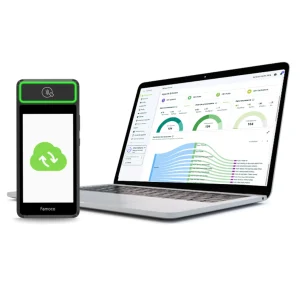
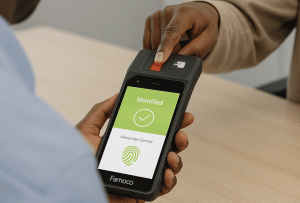
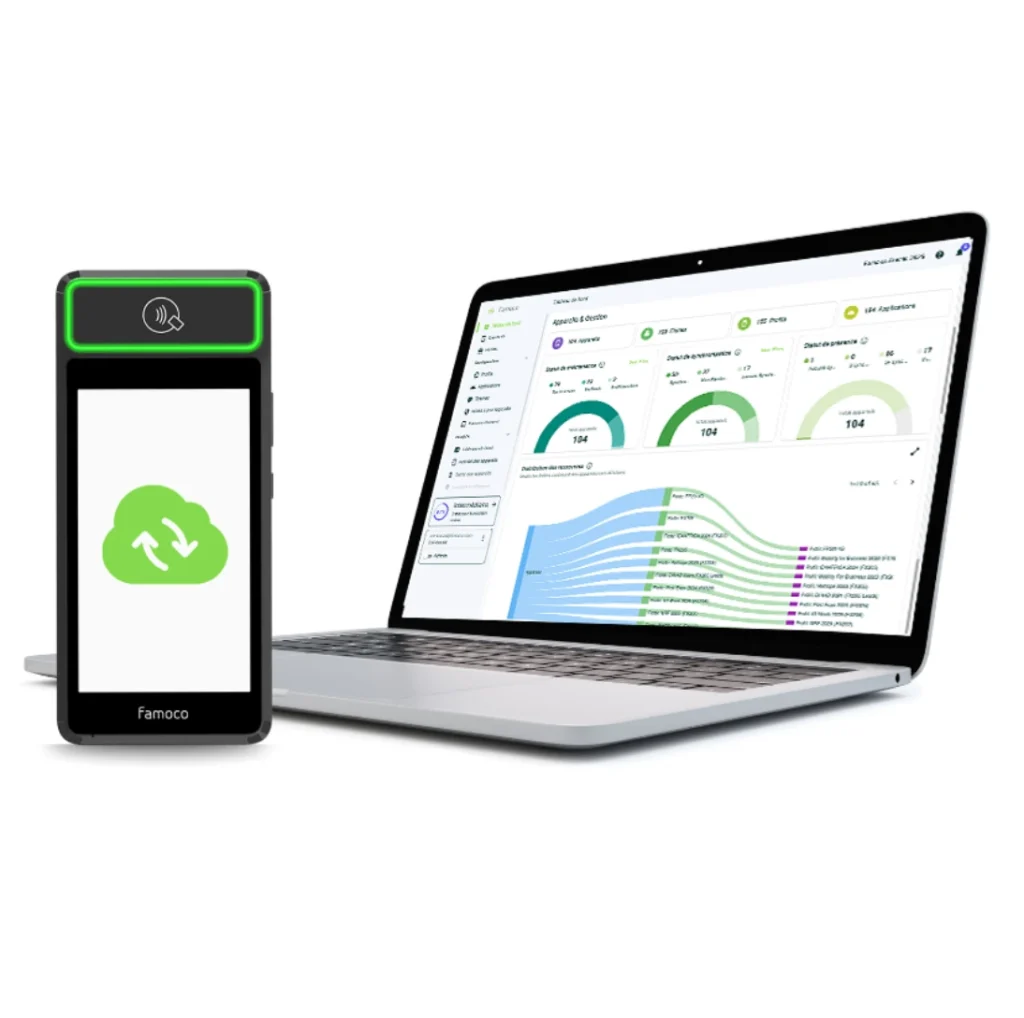
Rather than offering standalone software, Famoco has chosen to design a solution conceived as a complete ecosystem, a coherent chain in which each component (the device, the operating system, and the management platform) is designed to work together. This approach makes it possible to transform field device usage into actionable knowledge, supporting operational management and decision-making.
Stronger data security
This proprietary architecture allows controlled data processing, enhanced security for data flows, and full control over sensitive information stored in the MDM. By limiting dependencies on external components, companies retain control over their data throughout its lifecycle. This approach helps balance operational performance, data security, and industrial sovereignty requirements.
Simplified deployment
Famoco devices are recognized by the system from the moment they are manufactured. Upon first startup, the device automatically downloads its configuration within seconds. Pre-registered on the platform, they require no complex enrollment process. When devices are preconfigured in advance, they are ready to use straight out of the box.
A user-centric interface
Famoco’s MDM platform is designed to be intuitive and easy to use for operations managers and IT teams. They can create profiles, launch logistics operations, or deploy updates in just a few clicks, without requiring deep technical expertise. To support this autonomy, an online Help Center centralizes a large amount of documentation and answers to common questions, while the Famoco Academy offers more advanced training to fully leverage the platform’s strategic capabilities.
Greater flexibility
Famoco provides a wide range of tools and APIs that allow technical teams and developers to integrate the MDM and hardware into their own ecosystems. This openness enables them to design custom features and advanced integrations, often impossible to achieve with solutions based on generic hardware or software. The MDM thus becomes an evolving component capable of adapting to the specific operational needs of each organization.
Conclusion
Behind the single term “MDM” actually lie two fundamentally different approaches. On one side are generic MDM platforms, designed as software layers adaptable to any type of device. On the other are MDM solutions conceived as a native component of the work tool itself, integrated from the outset with the hardware and its operating system.
This integrated approach, combining dedicated hardware with a sovereign MDM, reduces operational friction, optimizes field operations, and allows teams to focus on their core business. By transforming usage data into clear and actionable insights, organizations gain greater visibility, responsiveness, and decision-making capacity.
FAQ on Mobile Device Fleet Management (MDM)
Does a sovereign ecosystem limit developer flexibility?
Standardizing devices does not restrict possibilities; rather, it creates a stable and controlled framework on which developers can build. This homogeneity provides an ideal environment for designing and deploying reliable, high-performance business applications.
Thanks to the APIs and tools provided, companies can integrate fleet management directly into their internal processes. The MDM no longer simply “monitors” devices; it becomes an active component of the IT infrastructure, capable of triggering predictive alerts or reconfiguring devices in real time depending on the context.
Is it possible to add a third-party device to the Famoco MDM?
Yes. In cases where specific hardware is required or already deployed, the Famoco platform can support third-party devices. However, these devices must first go through a qualification phase to ensure they meet the platform’s security, performance, and compatibility standards. That said, since Famoco does not control the operating system embedded in these devices, some Famoco features may not be available on them.
For more information about compatible third-party devices and integration conditions, visit:
https://help.famoco.com/devices/third-party-devices/
Why do we talk about reducing Total Cost of Ownership (TCO) with Famoco?
The value comes from efficiency: by automating deployment and providing an intuitive interface, you drastically reduce the amount of human effort required to keep your fleet operational.